The Ultimate Korean Summer Food Guide: From Samgyetang to Patbingsu
Korea beats the heat in two completely opposite ways — with food hot enough to make you sweat, and desserts icy enough to give you brain freeze. Here's a guide to what Koreans actually eat all summer, and the words to order it.
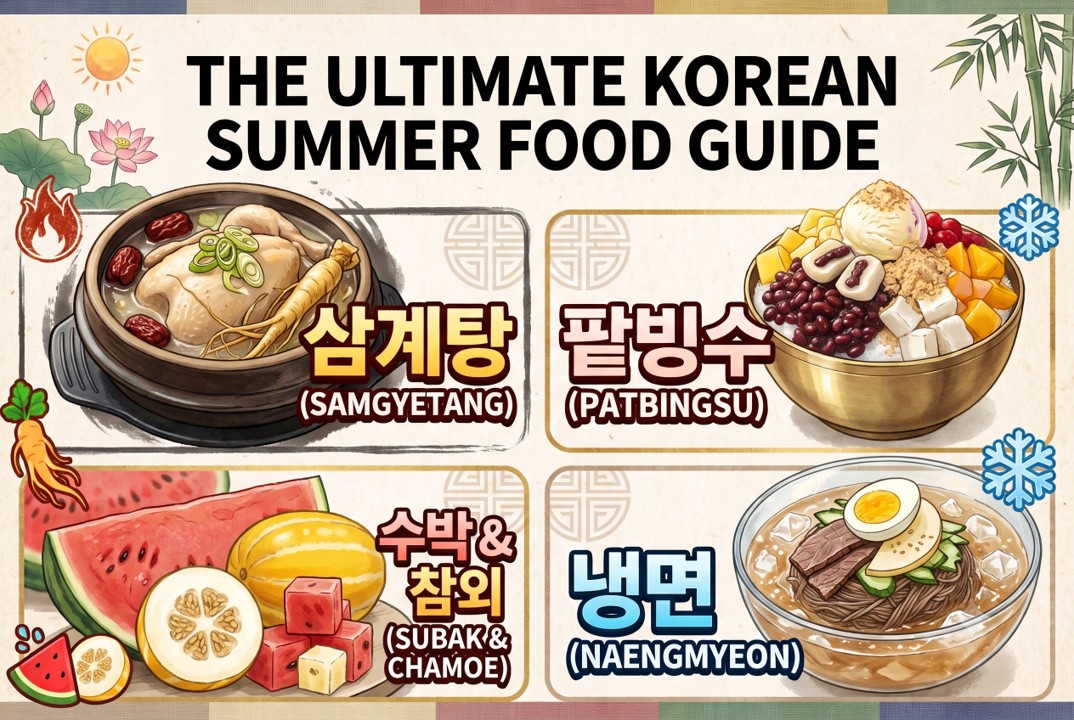
Every culture has its summer foods. But Korea's approach is a little different — it runs in two opposite directions at once.
On one side: boiling-hot chicken soup, eaten on the most sweltering days of the year on purpose. On the other: towering bowls of shaved ice, cold enough to hurt. Koreans swear by both, sometimes on the same day. Understanding why is a delicious little window into Korean culture — so let's eat our way through a Korean summer.
Part 1: Fighting Heat With Heat 🔥
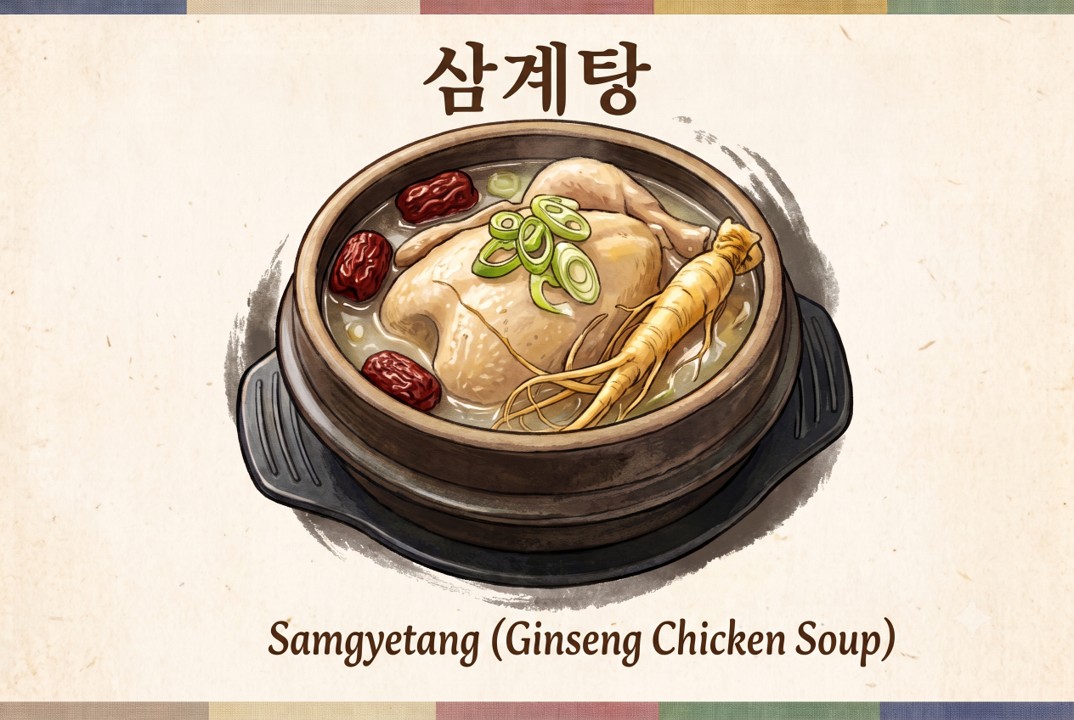
The most famous Korean summer food tradition happens on the 복날 (boknal) — the "dog days" that mark the peak of summer heat. There are three of them, spread across roughly mid-July to mid-August: 초복 (chobok) the first, 중복 (jungbok) the middle, and 말복 (malbok) the last. Together they're called 삼복 (sambok), the three hottest stretches of the Korean summer. On each one, Koreans eat 삼계탕 (samgyetang) — a whole young chicken stuffed with rice, ginseng, and jujube in a boiling-hot broth.
Eating hot soup in brutal heat comes from the idea of 이열치열 (i-yeol-chi-yeol) — "fight heat with heat." The theory: you sweat it out, cool down as it evaporates, and replace the energy the heat drained. (Curious how that actually works? We broke it all down in How Korea Survives Summer — worth a read.)
But Why Chicken?
Here's the part people rarely explain. Why a chicken, specifically?
The answer is refreshingly practical: chicken was traditionally the easiest high-protein food to get for an ordinary family. It was affordable, widely raised, and packed with the protein and nutrients people lost through summer sweat. Add ginseng — valued in Korean medicine for restoring energy — and you had an affordable "health meal" that anyone could make. Tradition did the rest.
It's Not Just Chicken: 보양식
Chicken is the icon, but the broader idea is 보양식 (boyangsik) — "body-restoring food" that rebuilds your strength in summer. Beyond samgyetang, Koreans also reach for 장어 (jangeo, grilled eel), 추어탕 (chueotang, loach soup), or 오리 (ori, duck) — different dishes, same goal: replace what the heat takes out of you.
Part 2: Cooling Down With Ice ❄️
If hot food is one half of a Korean summer, ice is the other — and honestly, it's the half most visitors fall in love with.
🍧 빙수 (Bingsu) — The King of Korean Summer Desserts
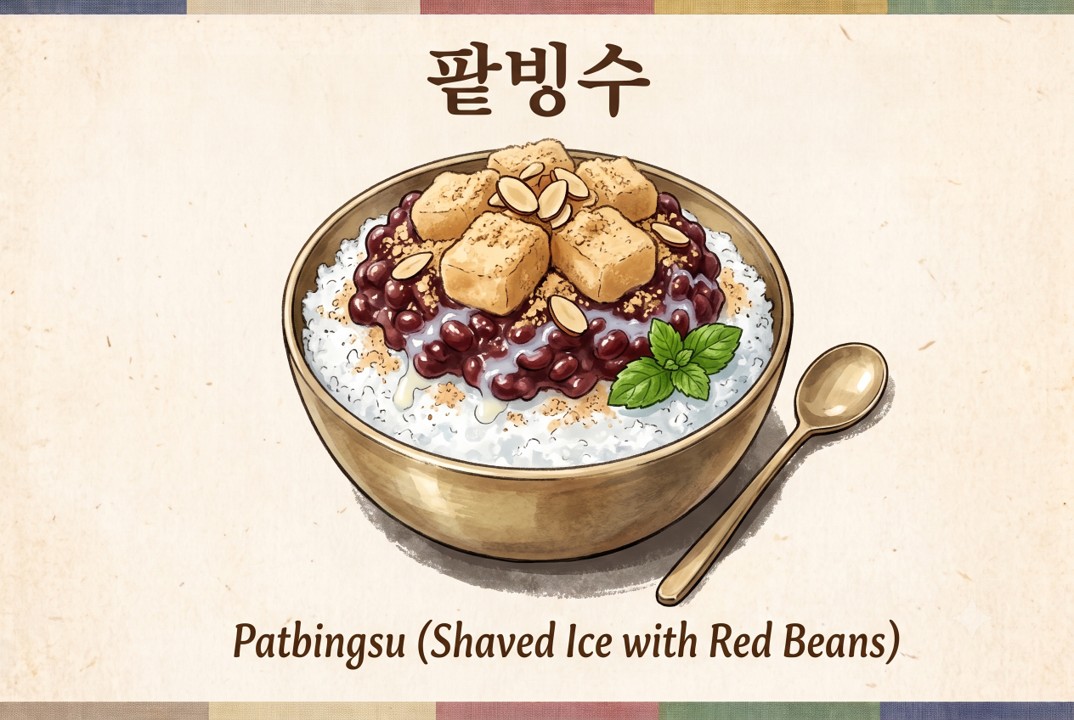
빙수 (bingsu) is shaved ice piled with toppings, and it's Korea's favorite summer treat. The classic is 팥빙수 (patbingsu) — shaved ice with sweet red beans and chewy rice cake.
That specific combination of shaved ice and sweet 팥 (red bean) is a Korean original, and it's since exploded into a whole universe: fluffy milk-snow bingsu, extravagant mango bingsu, and fruit-loaded versions that look like edible mountains. Ordering one to share is a summer ritual in itself.
🍜 The Cold Noodles: 냉면 & 콩국수
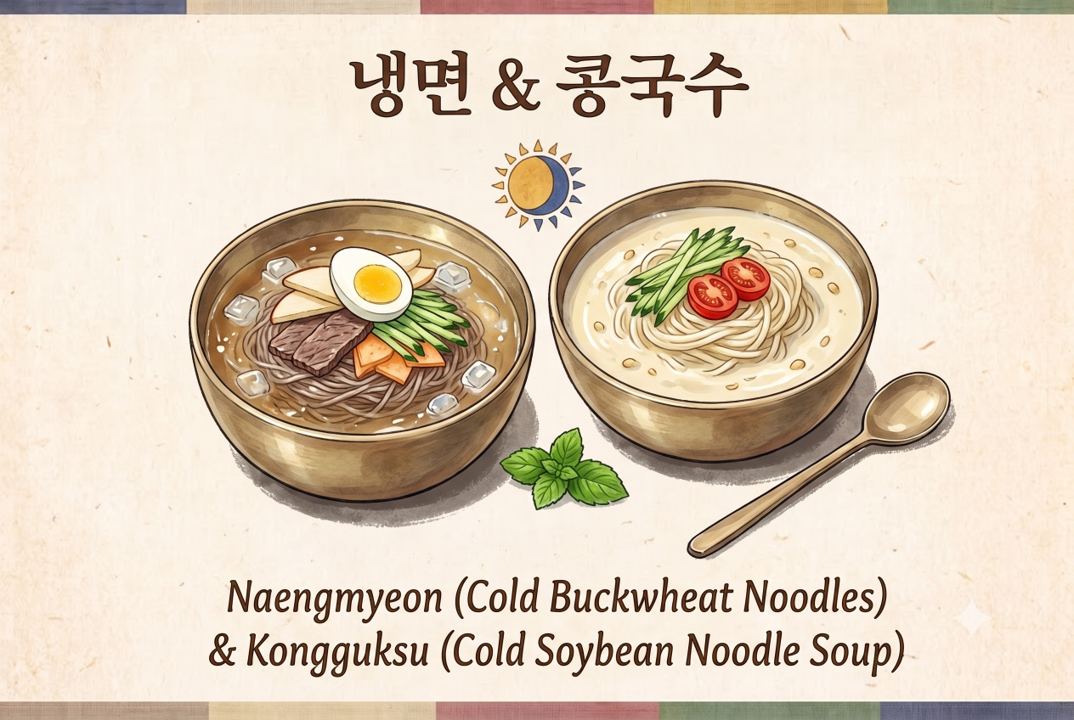
Summer is cold-noodle season, and two dishes rule:
- 냉면 (naengmyeon) — chewy buckwheat noodles served ice-cold, either in a tangy chilled broth (물냉면, mul-naengmyeon) or tossed in a spicy sauce (비빔냉면, bibim-naengmyeon).
- 콩국수 (kongguksu) — noodles in a chilled, nutty soy-bean broth. It's creamy, savory, and totally unlike anything most visitors have tried.
Fun fact worth knowing before you order 콩국수: Koreans famously disagree on whether to season it with salt or sugar. The Jeolla region tends toward sugar; most other regions reach for salt. Ask a Korean which is correct and you might start a (friendly) argument.
🍉 Summer Fruit: Watermelon and the Korean Melon
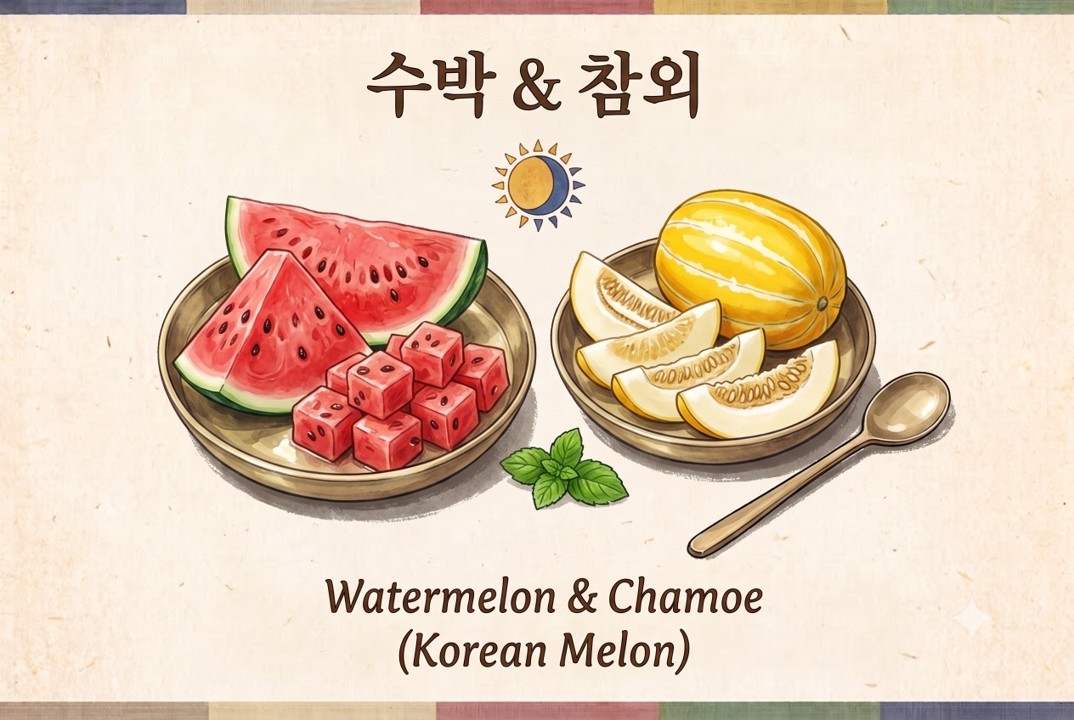
Korean summer is fruit. 수박 (subak) — watermelon is everywhere, and beyond just eating slices, Koreans make 수박화채 (subak-hwachae) — a chilled punch of watermelon chunks in sweet milk or cider with ice.
But the one to actually seek out is 참외 (chamoe) — Korean melon. This bright-yellow, oval melon is a staple of Korean summer that most foreigners have never seen. It's crisp, mildly sweet, and refreshing — ask any Korean and they'll tell you it tastes like summer itself.
And 참외 is having a global moment. Korean melon exports have been climbing fast: in Japan it's sold under the name "chame" (チャメ) and praised as cheaper than melon but just as sweet — easy to eat skin and all — and in 2026 it made its first-ever export to Vietnam. Its official international name is literally "Korean melon," so if you spot one abroad, now you know exactly what you're looking at.
🍦 Bonus: Korea's Classic Summer Ice Creams
You can't talk about Korean summer without the convenience-store freezer — and Korean ice creams come in two classic styles worth knowing:
- 하드 (hadeu) — hard, solidly-frozen bars on a stick. The name comes from the English word "hard," because the ice is, well, hard. (In English you'd just call these popsicles or ice pops.) A classic bit of Konglish (Korean-style English).
- 쭈쭈바 (jjujjuba) — soft ice frozen in a long plastic tube that you squeeze and slurp straight from the packaging, no stick required. In English these are usually called ice pops or freeze pops. The name comes from the slurping sound you make while eating one.
A few classics are pure nostalgia for every Korean:
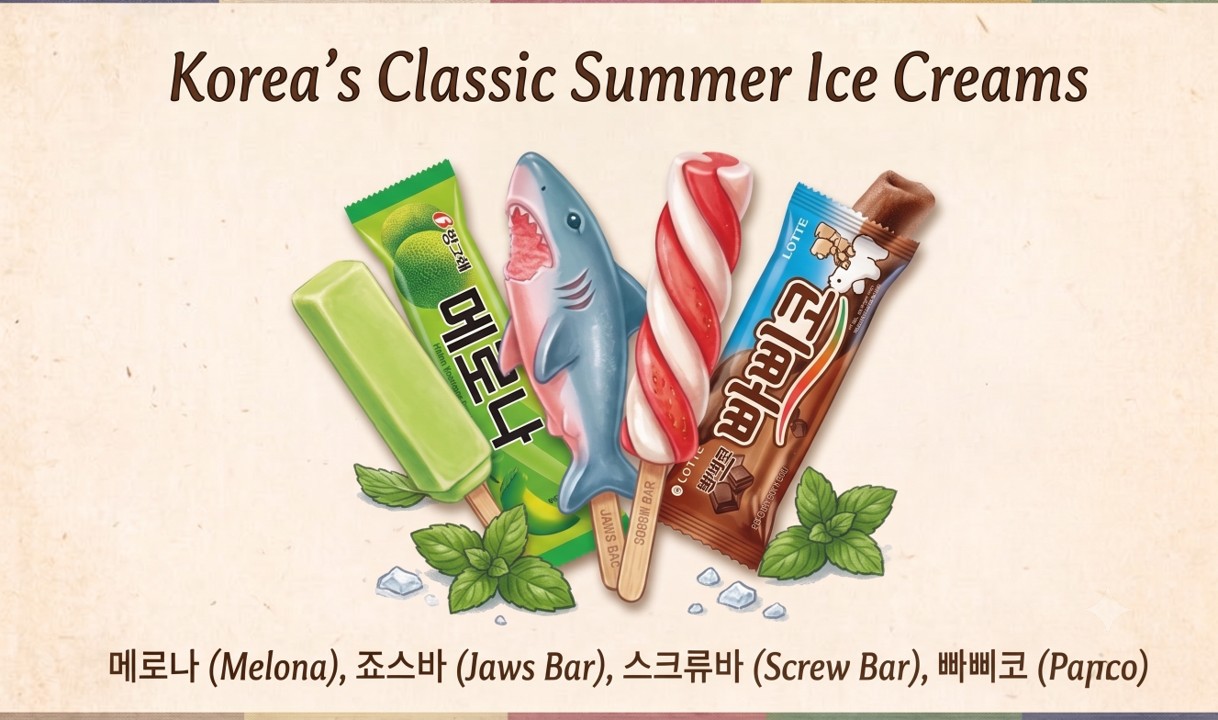
- 메로나 (Melona) — a creamy melon 하드, and Korea's all-time favorite. It's smooth and milky with a soft honeydew-melon flavor. Fun connection: melon and 참외 are the same species, so it tastes a lot like Korean melon. It's so loved that there's even a playful catchphrase — "올 때 메로나 (grab a Melona on your way back!)" — the kind of thing you'd jokingly text a friend who's out and heading home.
- 죠스바 (Jaws Bar) — a shark-fin-shaped 하드 with a tangy orange shell and a sweet strawberry sorbet center. The crisp outside and chewy inner sorbet are half the fun. Iconic since the '80s.
- 스크류바 (Screw Bar) — a spiral-twisted 하드 with a sweet strawberry outer layer and a tart green-apple core. The strawberry-and-apple combo is a classic you never tire of — and it's fun to turn as you eat it.
- 빠삐코 (Papico) — the most famous 쭈쭈바: a rich, sweet chocolate ice cream you squeeze up and slurp straight from the tube, with icy little crystals that keep it clean and refreshing. A summer staple since 1981, known for its super catchy old jingle.
Grab any of these from a 편의점 (convenience store) for about a dollar — it's the cheapest, most authentic taste of a Korean summer there is.
So... Hot or Cold?
The answer, very Korean-ly, is both. A classic summer day might mean a hot bowl of samgyetang for lunch to restore your energy, then a giant bingsu in the afternoon to cool back down. Sweat it out, then ice it over.
That's the quiet wisdom in Korean summer eating: you don't just endure the heat, you work with it — warming the body when it's drained, cooling it when it's overwhelmed, and turning the whole sweaty season into something worth looking forward to.
Korean Vocabulary: Summer Food Edition
| Korean | Romanization | Meaning |
|---|---|---|
| 보양식 | bo-yang-sik | Body-restoring "health food" |
| 삼복 | sam-bok | The three "dog days" of summer |
| 삼계탕 | sam-gye-tang | Ginseng chicken soup |
| 빙수 | bing-su | Shaved-ice dessert |
| 콩국수 | kong-guk-su | Cold soy-milk noodles |
| 하드 | ha-deu | Popsicle-style ice bar (Konglish for "hard") |
| 참외 | cha-moe | Korean melon |
Sample sentence:
오늘 너무 더운데 삼계탕 먹고 빙수로 마무리할까?
"It's so hot today — should we eat samgyetang and finish with some bingsu?"
That's the perfect summer combo, and exactly how a Korean would suggest it — heat first, ice after.
Want to order all of this like a local — and actually read the menu? At Seoul X On, our online Korean lessons connect the language to real Korean life, season by season — from summer food runs to everyday Seoul moments. Try a free trial lesson and taste your way through Korea.