SEVENTEEN's "Super (손오공)" Explained — and How to Learn It Free
A K-pop banger, a 500-year-old legend, and a handful of Korean words you can pick up in one listen — then learn the whole song with us in a free class.
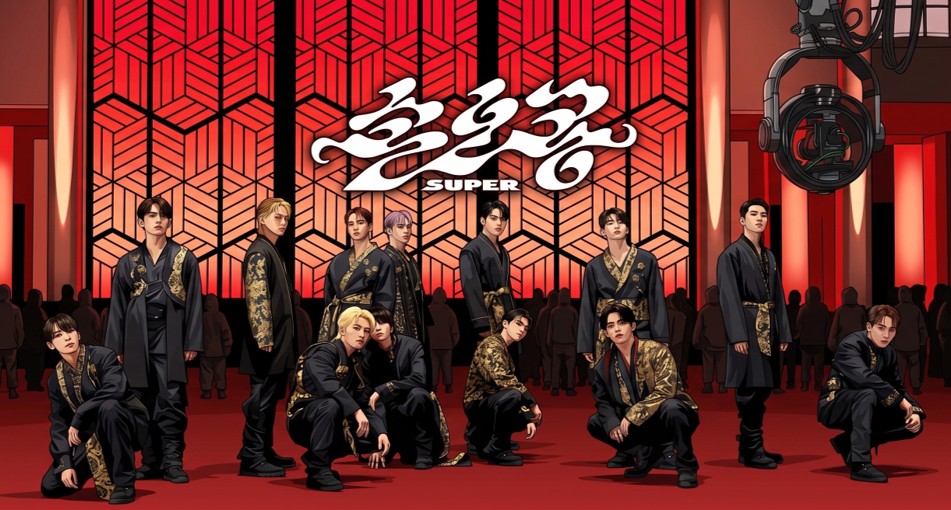
If you've ever had SEVENTEEN's "Super" on repeat and wondered why the Korean title is a person's name — or why all 13 members and a small army of dancers move like one giant creature — you've spotted the whole point of the song. The Korean title is 손오공 (Son Ogong) — the Monkey King — and once you know who he is, everything about the song clicks into place. Bonus: you'll walk away knowing some genuinely useful Korean, and it's easier than you'd think.
Let's get into it. 🐵
🐵 So Who Is 손오공 (Son Ogong)?
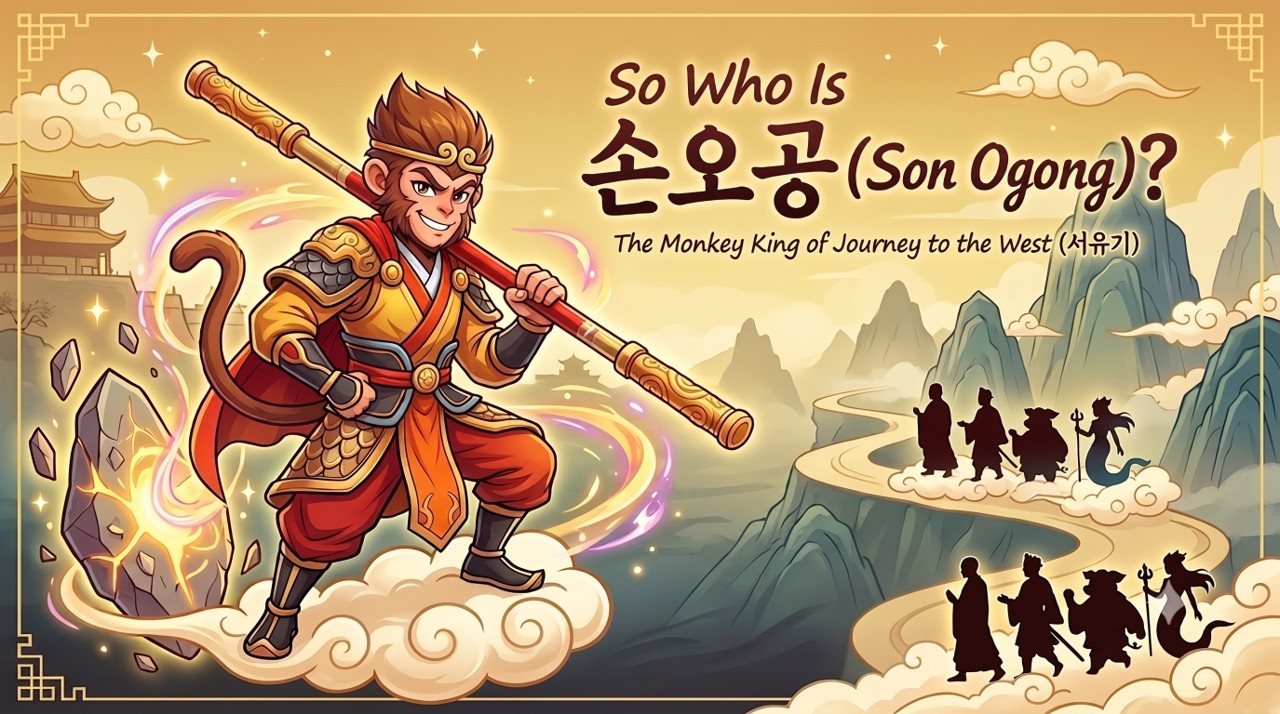
손오공 (Son Ogong) is the Korean name for the Monkey King, the hero of a 400-year-old Chinese novel called 서유기 (Seoyugi), or Journey to the West. It's one of those stories everyone in Korea, China, and Japan grows up knowing — the way Western kids grow up knowing Greek myths or fairy tales.
The short version: the Monkey King is born from a magic stone. He's absurdly strong, extremely proud, and a bit of a troublemaker. He can leap across the sky, fight anyone, and flat-out refuses to give up. Eventually he joins a monk on a long, dangerous journey — and here's the important bit — he does it as part of a team.
Hold onto that word. It matters later.
🎮 Hang On — Is This the Same Guy as Dragon Ball?
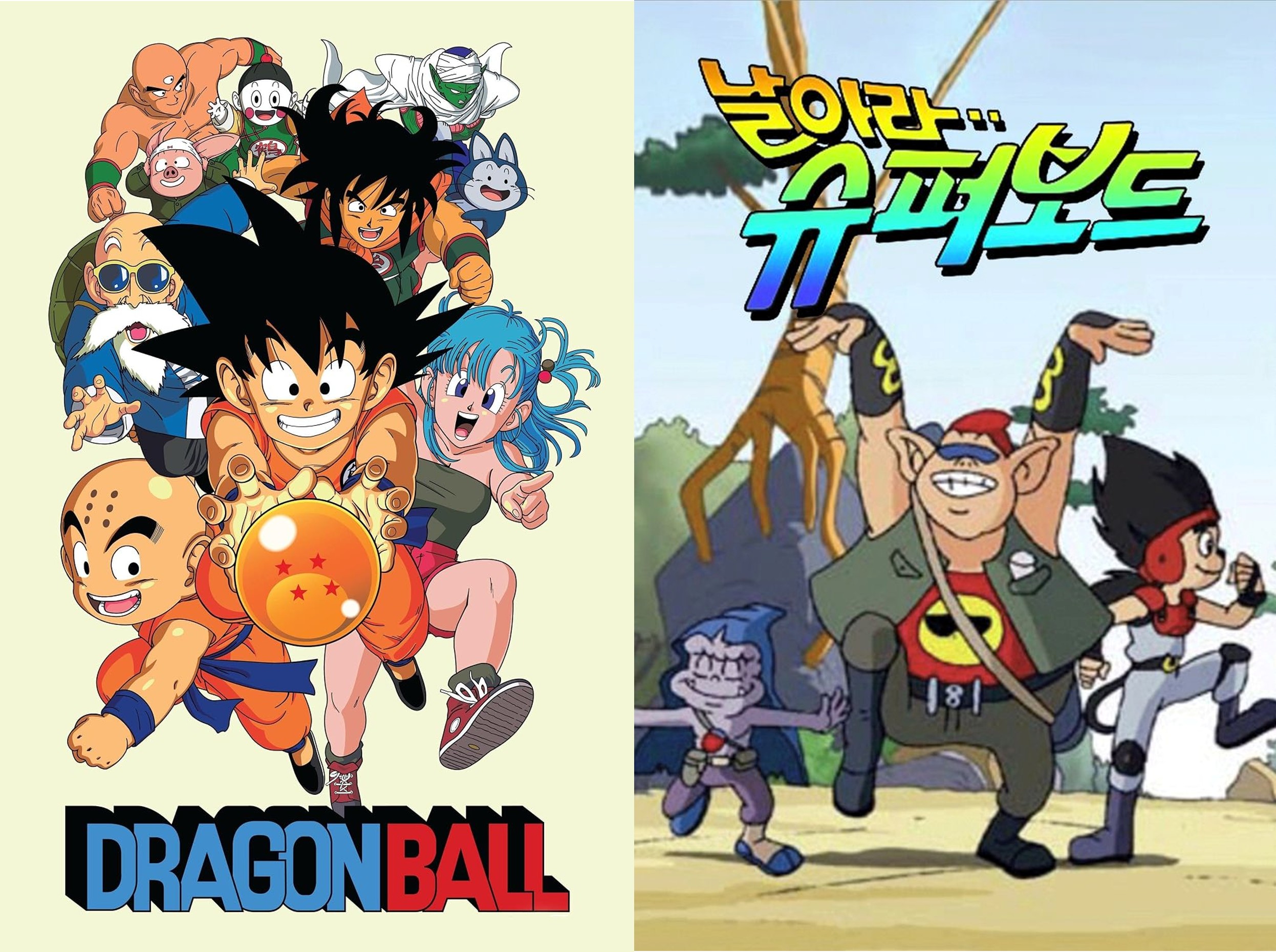
Yes! If you grew up on anime, you already know a version of this character without realizing it.
Son Goku from Dragon Ball is based directly on the Monkey King. The name, the fighting style, the flying cloud, the extending staff — all of it comes straight from the legend. The spiky-haired Saiyan you know from Saturday-morning cartoons and the ancient Monkey King are, at their root, the same character.
So "손오공 (Son Ogong)" and "Son Goku" are just two doors into the same story. One opened into an old novel; the other opened into your childhood. Honestly, half the fun of this song is realizing you've known the Monkey King your whole life.
And it's not only Japan. Korea made its own beloved version too: a '90s cartoon called 날아라 슈퍼보드 (narara syupeobodeu, "Fly, Superboard"), where the Monkey King zooms around on a flying board with his classic companions 저팔계 (Jeo Palgye, the easygoing pig) and 사오정 (Sa Ojeong). Sa Ojeong is so well known that his name even became a light, everyday word — if a friend mishears something, you might hear a playful "사오정?", since the cartoon's Sa Ojeong was known for not quite catching what people said. It's the kind of gentle, affectionate teasing you'd only use with someone close.
And any Korean who grew up then can still sing the show's opening chant — "치키치키 차카차카 초코초코 초!" — a string of nonsense syllables reportedly inspired by the sound of kids brushing their teeth. So the Monkey King isn't just a Chinese legend or a Japanese anime; he's woven right into everyday Korean life.
☁️ The Legend Is Hiding in the Lyrics
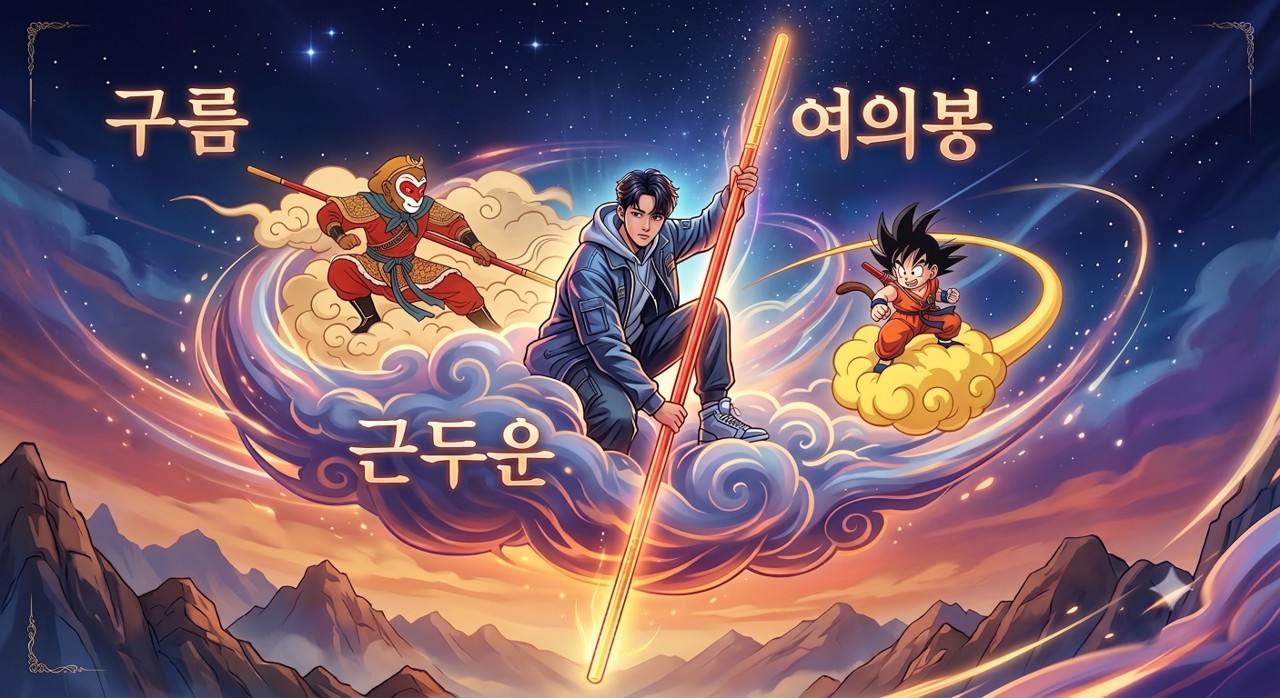
Here's where it gets really cool. SEVENTEEN packed actual objects from the legend into the song. If you don't know the story, they slide right past you. Now they won't.
Listen for this line:
Da-rum-da-rim-da, 구름을 타고 여기저기로 (gureum-eul tago yeogijeogiro) — "riding a cloud here and there."
That 구름 (gureum, cloud) isn't just any cloud. It's the Monkey King's magic cloud — it even has a name, 근두운 (geunduun) — the one he rides to fly across the whole world in a single jump. In Dragon Ball, it's the yellow flying nimbus that Goku sits on. Same cloud, different show.
And then this one:
Da-rum-da-rim-da, 늘어나라 하늘로 여의봉 (neureonara haneul-lo yeouibong) — "stretch up to the sky, magic staff."
The 여의봉 (yeouibong) is the Monkey King's magic staff — it can grow tall enough to touch the sky or shrink small enough to tuck behind his ear. Goku swings the exact same weapon in the early Dragon Ball episodes.
Tiny words, a whole legend behind them. That's the fun of learning Korean through K-pop — one line cracks open an entire story.
📲 We break down lyrics like these in short clips on our Instagram — quick, bite-sized Korean straight from the songs you're already listening to.
💜 But Why SEVENTEEN, of All Groups?
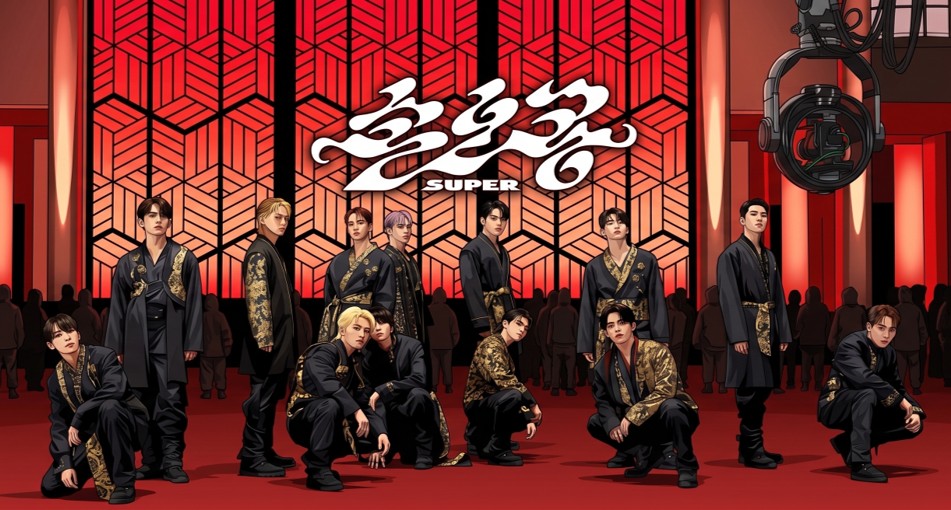
This is the part that gets fans in their feelings. In the legend, the Monkey King isn't born strong overnight — he becomes strong by pushing through trial after trial, leveling up the whole way. SEVENTEEN picked him for exactly that reason: after years of hard work, they see themselves as a group that's still growing, still climbing. And with 13 members, the song is really about all of them — not bragging that they've arrived, but saying they keep leveling up, together.
That's the meaning behind the hook everyone shouts:
마치 된 것 같아 손오공 (machi doen geot gata Son Ogong) — "it feels like I've become Son Ogong." Not "I am the hero," but "I feel like I'm turning into him." It's the sound of a group that keeps fighting and growing rather than sitting still.
And the chorus makes the team part impossible to miss:
I love my team, I love my crew.
Listen to how they describe the climb, too:
땅을 보고 계속 올랐지 정상까지 (ttang-eul bogo gyesok ollatji jeongsang-kkaji) — "eyes on the ground, I kept climbing all the way to the top."
The lyrics keep reaching for 우리 (uri, "we/us") instead of "I." SEVENTEEN started from the bottom and climbed toward the 정상 (jeongsang, the top) together — just like the Monkey King getting stronger through his journey, with his crew beside him. That's why the video's biggest moment is a massive group dance where dozens of people move as a single body. It's teamwork you can actually see — and it's a lot of feelings in one performance.
📺 Want More Monkey King? Watch 신서유기
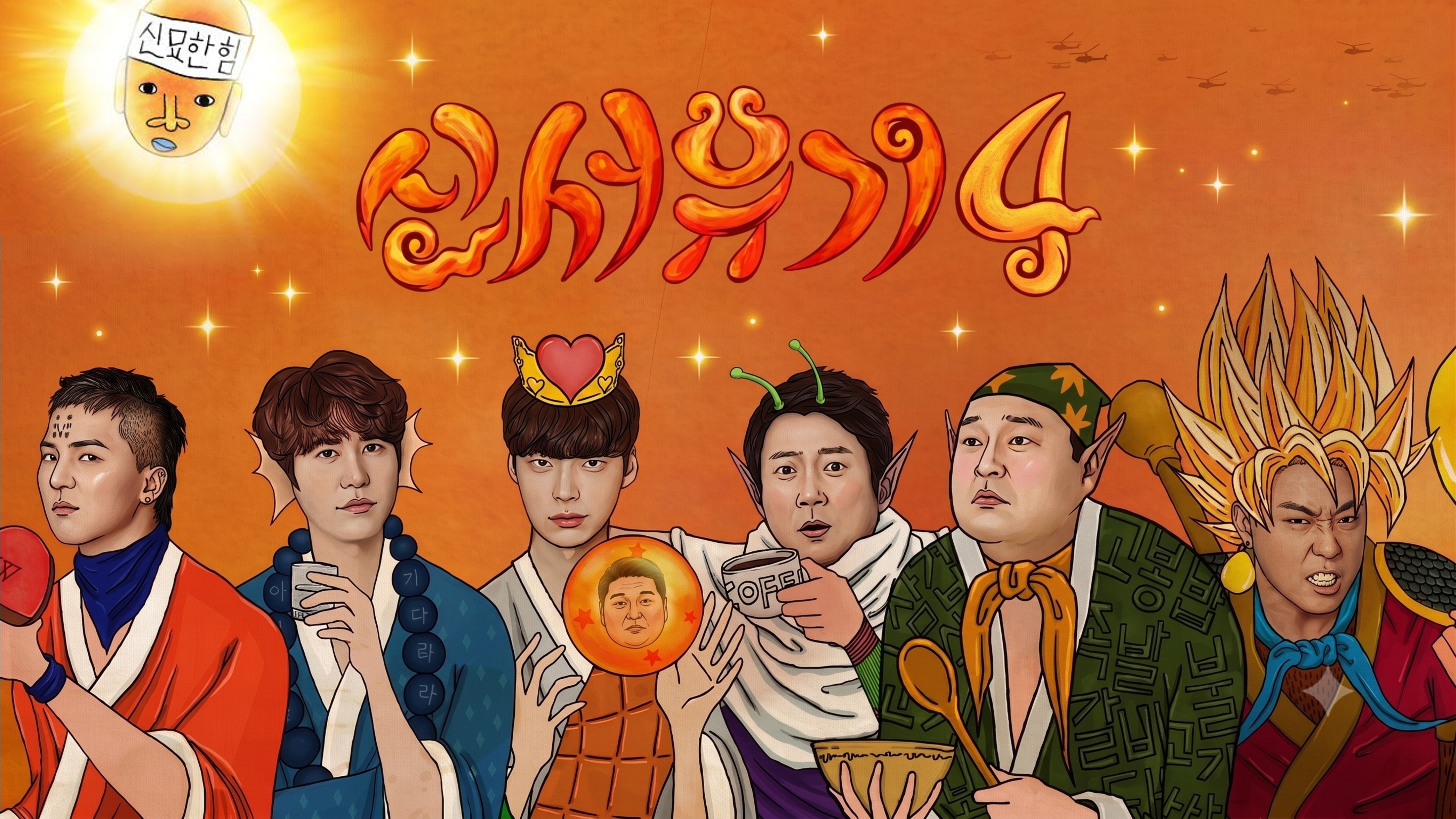
If you're into Korean variety shows, there's a famous one built on this exact legend: 신서유기 (Sinseoyugi), "New Journey to the West." A cast of Korean stars dress up as characters from the story and play (often ridiculous) games to collect dragon balls. It's warm, chaotic, and a great, low-pressure way to hear natural Korean. Save it for after the song — it'll keep the Monkey King fun going.
📝 Korean Vocabulary From Seventeen "Super"
Here are five words worth keeping. Say each one out loud once — that's honestly how they stick.
| Korean | Romanization | Meaning |
|---|---|---|
| 원숭이 | won-soong-i | Monkey |
| 하늘 | ha-neul | Sky |
| 구름 | goo-reum | Cloud |
| 정상 | jeong-sang | The top |
| 긍지 | geung-ji | Pride |
Sample sentence: 손오공은 구름을 타고 하늘로 올라가요.
(Son Ogong-eun gureum-eul tago haneul-lo ollagayo.)
"The Monkey King rides a cloud and climbs up into the sky."
Four of those words show up right in the song, so once you've got them, you'll catch them every time you listen.
🎤 Learn This Song With Us — Free Class!
Now you've got the legend, the objects hidden in the lyrics, and the reason SEVENTEEN moves as one team. But there's even more Korean tucked inside "Super" — playful grammar, a pronunciation twist that even tripped up some Korean listeners, and everyday phrases you can start using right away.
We teach songs exactly like this in our live K-pop Korean classes at Seoul X On. You listen, you learn the words, you sing along — no experience needed, and mistakes are part of the deal.
How To Join?
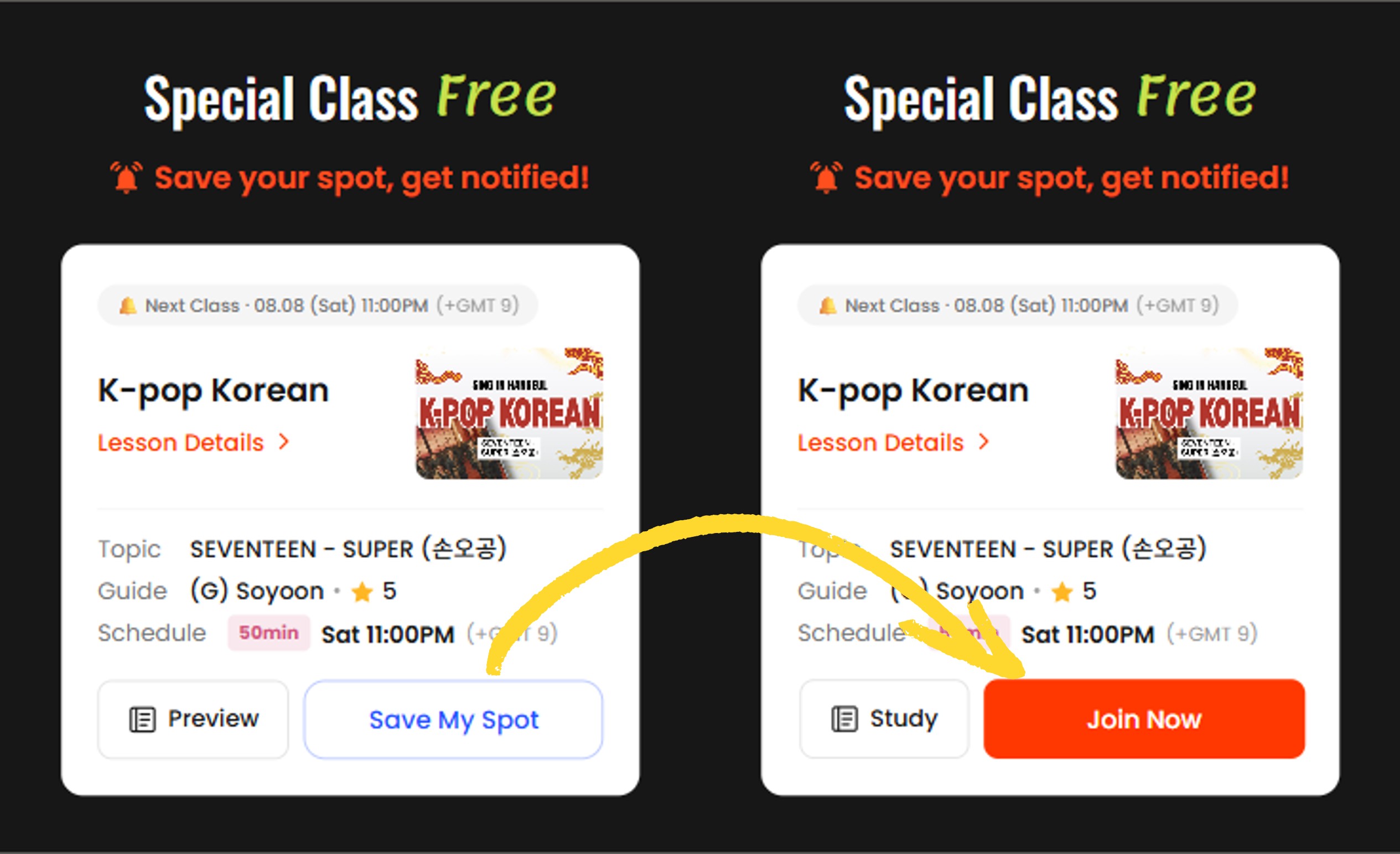
Go to seoulxon.com/group-class, find the "Special Class Free" section, and click "Save My Spot." You don't need a separate Zoom link — when class time arrives, the "Save My Spot" button turns into "Join Now." Just click it to enter the class.
❓ Free K-pop Korean Class — FAQ
- Is the class really free? Yes. Your first live group class is completely free — no payment, no card required. You just sign up and show up.
- Do I need to know any Korean already? No. Classes are beginner-friendly, and the K-pop lessons are built so total beginners can follow along. If you can't read Hangeul yet, that's fine — signing up also unlocks a free 1:1 trial lesson where you can start learning to read.
- When is the K-pop class? The live K-pop Korean class runs on Saturdays. Because learners join from all over the world, here are the start times in a few time zones:
Region | Start Time |
|---|---|
🇮🇳 India | Sat 7:30 PM |
🇺🇸 US (Eastern / EDT) | Sat 10:00 AM |
🇲🇽 Mexico | Sat 9:00 AM |
🇫🇷 Paris (CEST) | Sat 4:00 PM |
Not in one of these regions? Head to seoulxon.com/group-class — the schedule shows every class start time automatically in your own time zone.
- What do we do in a class to learn Korean through K-pop? You listen to the song, learn the key words and expressions in the lyrics, practice the tricky pronunciation, and sing along. It's relaxed and fun — mistakes are expected and totally welcome.